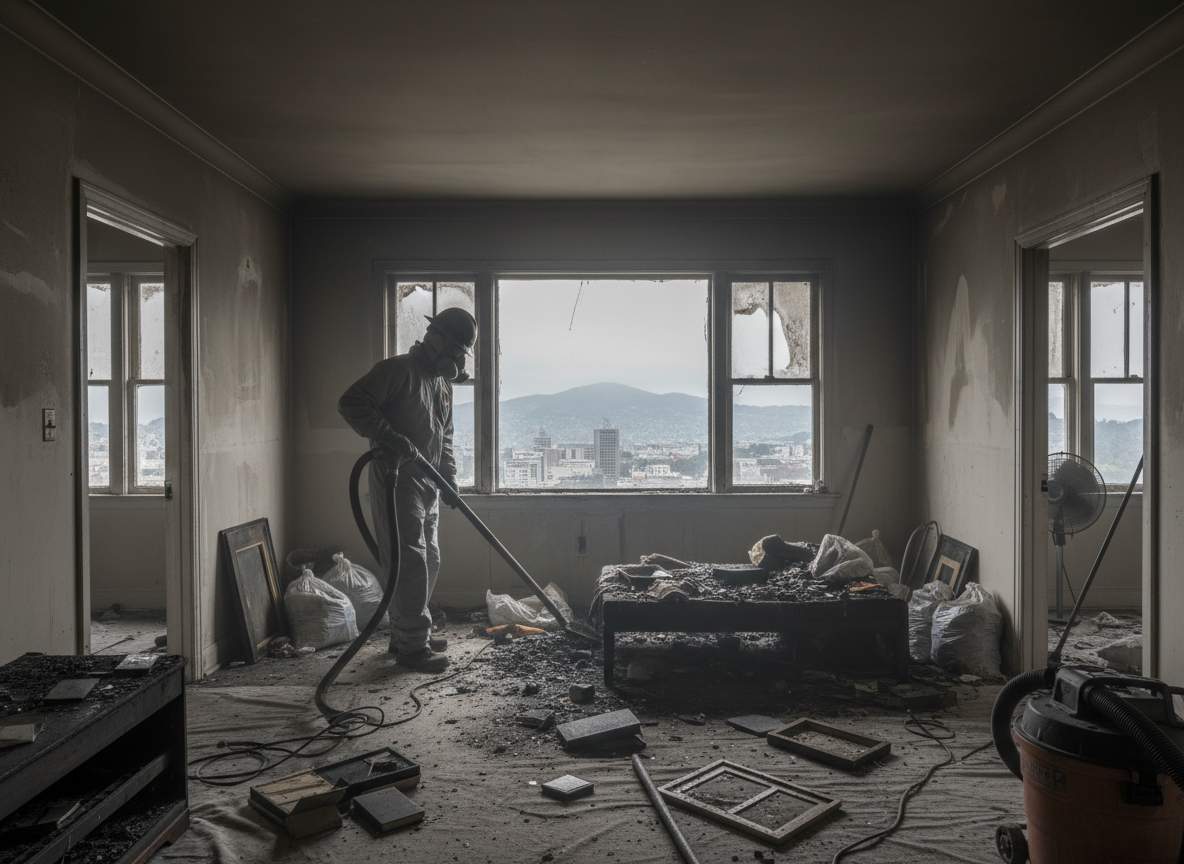
Tenant fire damage cleanup in Twin Peaks often involves older wood-frame cabins and homes built on steep mountain slopes where smoke travels quickly through attics and crawl spaces. Warm summer days can bake soot into porous surfaces like drywall and insulation while cold snowy winters trap residue inside because windows stay sealed. Crews must account for the county's freeze-thaw cycles that push soot deeper into wall cavities before any cleaning begins.
Work starts with negative-air containment to keep particles from migrating into undamaged units, especially important in multi-tenant buildings common near CA-189. Technicians test for hidden char in subfloors and use specialized sponges and HEPA vacuums rather than water on unfinished wood that swells in the mountain humidity. Final clearance includes odor checks with thermal fogging because residual smoke lingers in the dry winter air.
San Bernardino County properties near Crestline and Lake Arrowhead frequently have knob-and-tube wiring and single-pane windows that complicate sealing during cleanup. Teams document every layer removed so landlords can coordinate with insurance without delays from weather-related access issues on narrow, icy roads. All debris leaves the site in sealed containers to avoid recontamination on return trips through snow.
Technician insight
In Twin Peaks, the thing that catches most people out with tenant fire damage cleanup is how winter snow loads on older cabin roofs force soot deeper into attic insulation during the fire itself, so we always pull insulation before any cleaning starts or the smell returns the first time the furnace kicks on.
Kitchen Fire Smoke in Twin Peaks Rental
A tenant in a 1960s cabin near CA-189 reported heavy smoke from a stovetop fire that spread through the attic. We found soot coating insulation and ceiling joists that had been sealed by recent snow. After negative-air containment and insulation removal, we cleaned all surfaces and treated the HVAC; the unit passed clearance and was ready for the next tenant within five days.
How it works
- 1
Initial Assessment
Technicians arrive within hours, document smoke patterns room by room, and test surfaces for pH to determine the right cleaning agents for Twin Peaks wood and drywall.
- 2
Containment and Ventilation
Plastic barriers and negative-air machines isolate affected units while portable heaters and dehumidifiers manage winter moisture that can set soot.
- 3
Soot and Residue Removal
Dry sponges, HEPA vacuums, and approved solvents clean ceilings, walls, and contents without spreading particles into neighboring rentals.
- 4
Final Odor Treatment and Clearance
Thermal fogging neutralizes remaining smoke smell, followed by a walkthrough with the property manager to confirm all surfaces meet move-in standards.
Pricing
Cost depends on square footage affected, smoke migration into HVAC, and winter access conditions; call 24/7 for an on-site assessment and written scope.