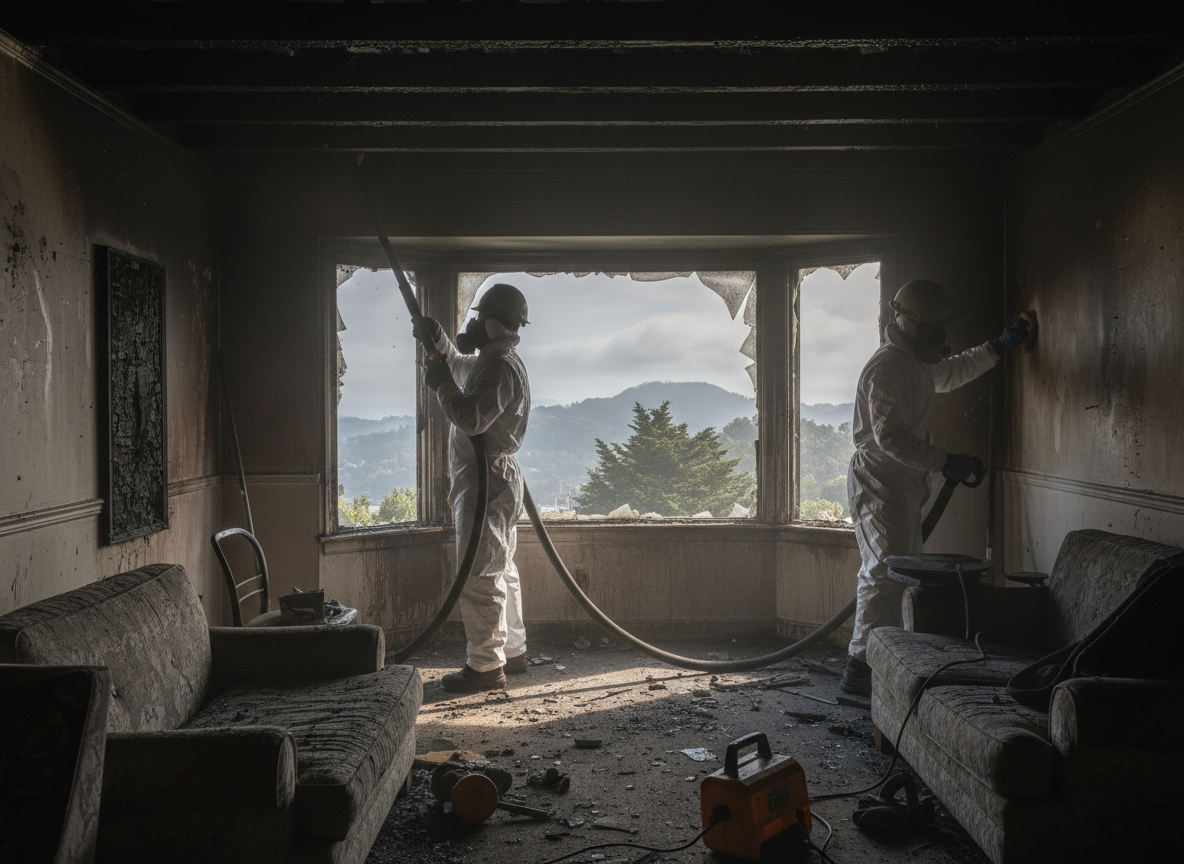
Smoke from structure fires or woodstove incidents travels through the tight seams of older Twin Peaks cabins built against steep slopes. Soot bonds to unfinished pine, drywall, and insulation that stay cold during snowy winters, requiring solvent-based cleaners rather than water-based methods that can drive residues deeper. Crews start by mapping airflow paths created by the area's frequent temperature inversions that trap smoke near the ground instead of letting it vent upward.
In Lake Arrowhead and Crestline homes with similar construction, smoke often migrates into HVAC ducts routed through unconditioned attics. Technicians seal registers first, then run HEPA air scrubbers with activated carbon for days while monitoring humidity levels that spike when spring melt begins. Failure to address these hidden cavities leaves odors that reappear the next time woodstoves fire up in November.
Porous materials like cedar siding and carpet padding common on local hillsides absorb acidic smoke particles that etch surfaces if left untreated through freeze-thaw cycles. Restoration includes removing and replacing affected insulation batts, then applying sealers rated for thermal expansion so new finishes do not crack when winter temperatures drop below freezing.
Seasonal Smoke Challenges
Cold snaps keep windows sealed, allowing smoke to settle into baseboards and electrical boxes. Spring runoff raises crawlspace moisture that reactivates odors in previously cleaned areas, requiring repeat visits if initial drying was rushed.
Technician insight
In Twin Peaks the thing that catches most people out with smoke damage restoration is how quickly soot bonds to cold pine framing during a January fire; once the house warms up again the odor returns because the residues were never fully extracted from the cavities that stay below freezing under the snow load.
Crestline Road Cabin Smoke Event
A woodstove backdraft filled a 1970s cabin with heavy smoke during a cold snap. Inspection showed soot had entered wall cavities through unsealed electrical boxes and settled into fiberglass batts that remained frozen. Crews removed the insulation, solvent-cleaned framing, and ran continuous scrubbing until spring melt; the home passed clearance testing before the next heating season.
How it works
- 1
Initial Assessment
Technicians inspect every room, attic, and crawlspace to trace smoke migration routes through the home's actual construction details.
- 2
Containment and Air Scrubbing
Negative air machines isolate affected zones while carbon filters pull particulates before they spread to unaffected living spaces.
- 3
Surface and Cavity Cleaning
Solvent and thermal fogging treatments reach behind walls and under flooring where smoke has settled during cold weather events.
- 4
Odor Neutralization and Sealing
Enzyme and sealant applications lock remaining residues so they do not reactivate during the next winter heating season.
- 5
Final Clearance
Independent air quality checks confirm levels meet habitable standards before contents are returned and normal occupancy resumes.
Pricing
Pricing depends on square footage affected, depth of soot penetration into insulation, and whether HVAC systems require disassembly.