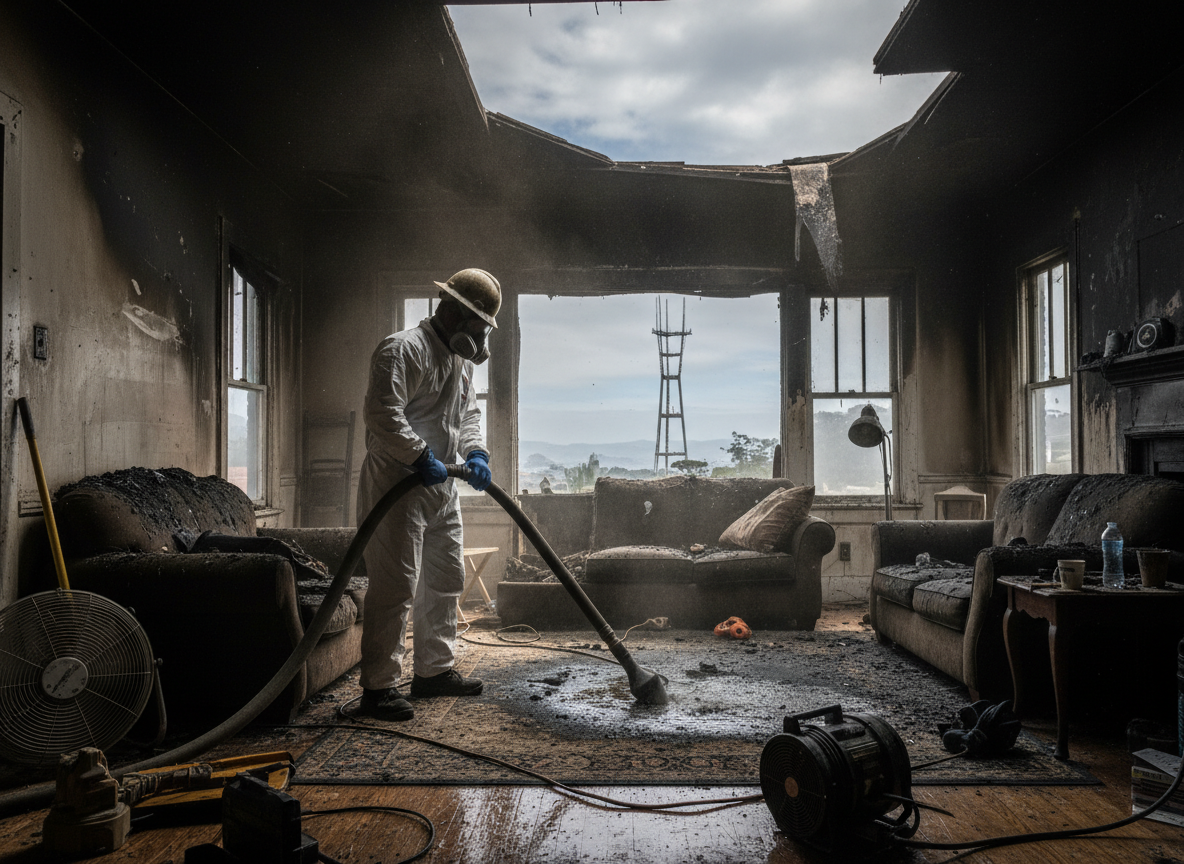
Twin Peaks sits at elevation in the San Bernardino Mountains where winter snow loads and freeze-thaw cycles often follow fire events. When suppression water freezes inside wall cavities or attics of older wood-frame cabins, hidden ice can mask ongoing moisture damage that later turns into mold once temperatures rise. Crews dispatched from 26100 CA-189 must first verify load-bearing integrity on snow-covered roofs before interior work begins, because heavy equipment movement on ice can shift compromised framing.
Smoke residue in these mountain homes travels differently than in flatland properties. The steep terrain and frequent temperature inversions trap particulates in lower levels and crawl spaces, requiring negative-air machines staged outside to avoid pulling soot into unaffected rooms. Residue on cedar siding and shake roofs common around Crestline also demands specialized cleaning agents that won't streak when temperatures drop below freezing at night.
Electrical and HVAC systems in pre-1970s Twin Peaks homes frequently run through shared chases that connect to neighboring structures on narrow lots. An emergency assessment must trace every run to the service panel before power restoration, because a single missed junction box can re-ignite once heating systems are turned back on after a cold snap.
Technician insight
In Twin Peaks the thing that catches most people out with emergency fire damage restoration is how quickly suppression water freezes inside walls during a cold snap, then melts days later and soaks insulation that was never removed. Older cabins near Lake Arrowhead often have single-layer roofs that hide this until ceilings start to stain.
Frozen Water Intrusion After Chimney Fire
A Crestline cabin experienced a chimney fire that spread soot through the attic. Suppression water pooled and froze overnight. We located the ice behind knee walls, thawed and extracted it, then dried the cavities before mold could form once temperatures climbed. The home was returned to occupancy without additional demolition.
How it works
- 1
Initial Site Safety And Access
Technicians arrive from the Twin Peaks base, evaluate structural stability under snow or ice, and establish safe entry points before any interior work.
- 2
Water And Debris Removal
Standing water from suppression efforts is extracted and frozen material is thawed and removed to prevent secondary damage in cold mountain conditions.
- 3
Smoke And Soot Cleaning
HEPA filtration and specialized agents clean residue from surfaces while negative pressure contains particles within the affected structure.
- 4
Drying And Monitoring
Industrial dehumidifiers and air movers run until moisture readings meet industry standards, with daily checks during winter temperature swings.
- 5
Final Walkthrough And Documentation
Homeowner reviews completed work; all affected areas are photographed and logged for insurance purposes.
Pricing
Pricing varies by extent of fire and smoke spread, accessibility on mountain roads, and whether winter conditions require extra equipment for snow and ice removal.