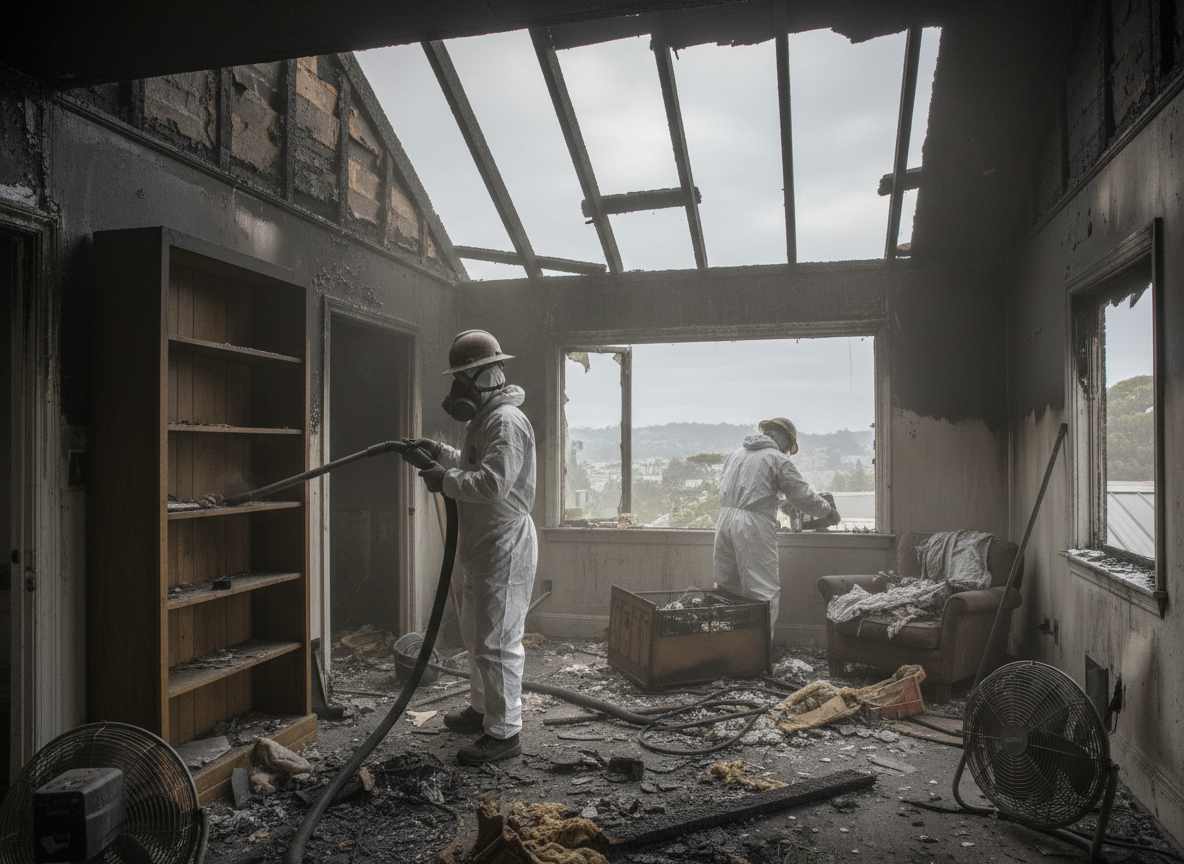
Twin Peaks sits in San Bernardino County at elevation where warm summers give way to cold snowy winters that force homeowners to seal homes tightly. After a fire this creates pockets of acidic soot that etch into pine paneling, cedar shake roofs and older plaster walls common in cabins built before 1970. Cleanup crews must neutralize pH levels on every surface before winter moisture returns or corrosion spreads into wiring and HVAC ducts shared with neighboring Crestline properties.
Ash from structure fires mixes with road salt and pine needles that wash down steep driveways along CA-189 during spring melt. Standard HEPA vacuums alone leave microscopic particles that later stain when snow melt raises indoor humidity. Technicians therefore use specialized alkaline rinses followed by negative-air machines positioned to exhaust toward prevailing winds that typically blow from Lake Arrowhead toward Twin Peaks.
Disposal rules in San Bernardino County require double-bagging charred debris and manifest tracking when loads cross county lines toward approved landfills. Homeowners who attempt DIY removal often violate these rules and face fines while also disturbing settled soot that re-contaminates living spaces once furnaces kick on during the first cold snap.
Edge cases include hidden ember damage inside crawl spaces under raised cabins where melting snow creates damp conditions that turn soot into a conductive paste capable of shorting electrical boxes. Only crews familiar with these local conditions know to pull baseboards and inspect every joist before declaring a structure clean.
Technician insight
In Twin Peaks the thing that catches most people out with fire damage clean up is how heavy winter snow sits on roofs and drives acidic soot deeper into rafters and insulation before crews can reach the property from the 26100 CA-189 base.
Hidden Soot in a Twin Peaks Cabin Attic
A homeowner near the CA-189 junction reported smoke odor after a kitchen fire two weeks earlier. Inspection found soot had migrated into the uninsulated attic where melting snow had created damp conditions that bonded residue to rafters. Crews removed affected insulation, neutralized surfaces and restored airflow before the next cold front arrived.
How it works
- 1
Initial Assessment
Technicians arrive from the 26100 CA-189 location within hours, document all affected rooms and test surfaces for pH and hidden moisture while noting snow depth that may block access routes.
- 2
Containment and Ventilation
Plastic barriers and negative-air units isolate work zones so soot does not migrate into unaffected areas of Twin Peaks homes during the dry windy periods common in late summer.
- 3
Residue Removal
Alkaline cleaners and media blasting remove soot from wood, drywall and masonry while crews monitor outdoor temperatures to prevent rinse water from freezing on exterior walls.
- 4
Final Clearance
Air sampling and surface testing confirm residue levels meet county standards before barriers come down and the home is returned to the owner.
Pricing
Cost depends on square footage affected, depth of soot penetration into older log or frame construction and whether winter access requires extra equipment; request an upfront assessment.