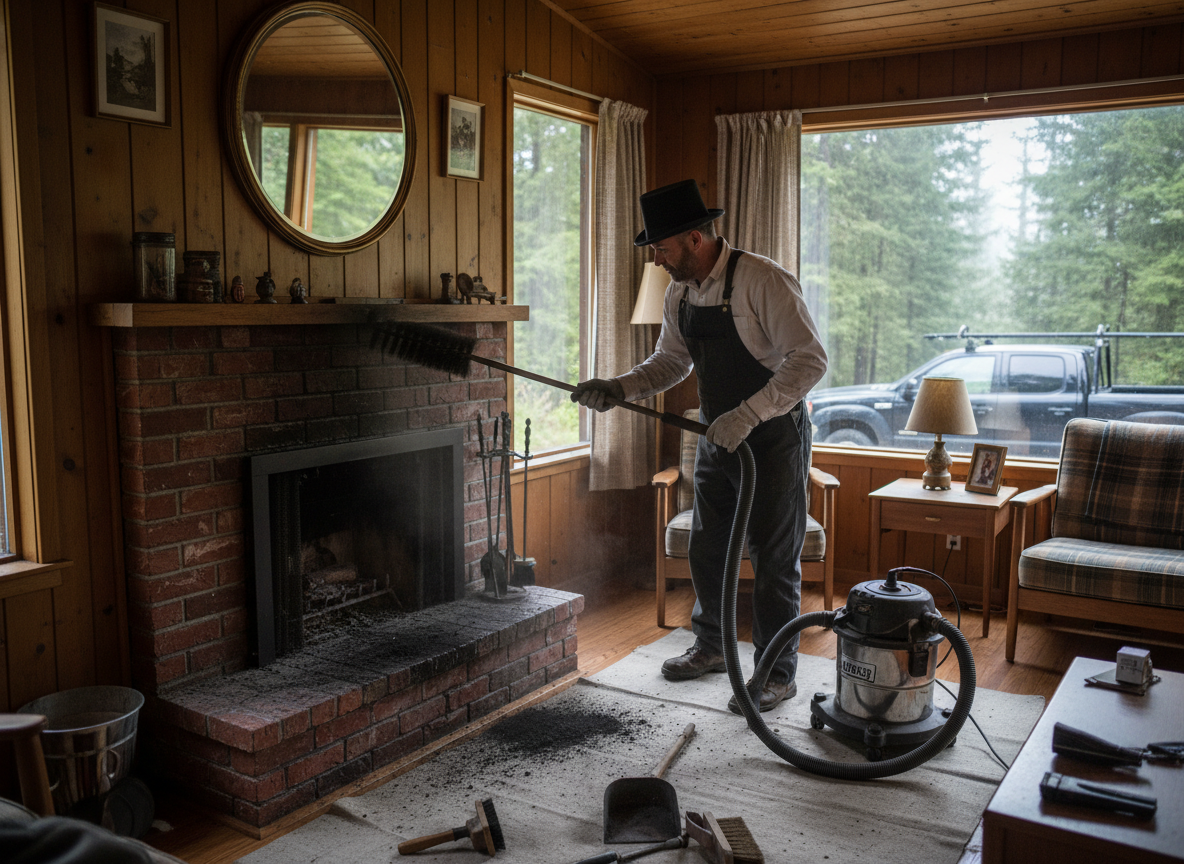
Soot from structure fires in Twin Peaks settles differently than in flatland areas because of the steep terrain and older cabin construction common along Highway 189. Fine particles travel through chases and settle in attics where cold air from snowy winters pulls them deeper into insulation and between log walls. Standard vacuuming fails here; technicians must use HEPA filtration and alkaline sponges on textured surfaces to avoid smearing that becomes permanent once humidity rises in spring.
Many Twin Peaks homes built before 1980 have oil-based finishes and unsealed stone fireplaces that hold alkaline soot. Attempting water-based cleaners on these surfaces sets the residue and creates secondary staining that requires media blasting later. Crews test pH levels on site and switch between dry sponging and solvent gels depending on whether the soot came from synthetic furnishings or wood-burning stoves common in Crestline.
After containment, negative air machines run continuously because mountain winds can push soot back into living spaces through gaps around single-pane windows. Final clearance includes wiping every horizontal surface and checking HVAC returns that often route through crawl spaces exposed to the cold ground. Homeowners who skip this step notice re-soiling within weeks once the first winter storm forces the furnace to cycle.
Edge cases include soot trapped in cedar closets and under floor registers where snow melt creates damp conditions that bind particles to subflooring. Restoration stops only after a white glove test on multiple surfaces and verification that no visible film remains on light fixtures or ceiling fans typical in these A-frame structures.
Technician insight
In Twin Peaks the thing that catches most people out with soot removal is how the first cold snap after a fire pulls particles deep into the insulation batts of older cabins along Highway 189; if you don't pull those batts you will be back the next winter when the furnace starts.
Soot in attic insulation near Lake Arrowhead Road
A winter fire left fine soot throughout a 1970s cabin. Inspection showed heavy accumulation in the attic where cold air had drawn particles into fiberglass batts. Crews removed the insulation, dry-cleaned all framing, and sealed the space before reinstalling new material. The home passed clearance testing and no re-soiling occurred after the next snowstorm.
How it works
- 1
Initial Assessment
Technicians inspect all affected rooms, attics, and HVAC systems to map soot migration patterns specific to Twin Peaks cabin layouts.
- 2
Containment Setup
Plastic barriers and negative air machines isolate work zones to prevent cross-contamination into unaffected areas during winter heating cycles.
- 3
Dry Cleaning Phase
HEPA vacuums and chemical sponges remove loose and embedded soot without spreading residue across textured wood and stone surfaces.
- 4
Final Verification
Multiple surface tests confirm no visible film remains before equipment is removed and normal occupancy resumes.
Pricing
Cost depends on square footage affected, soot depth, and whether HVAC cleaning is required; upfront quotes provided after on-site inspection.