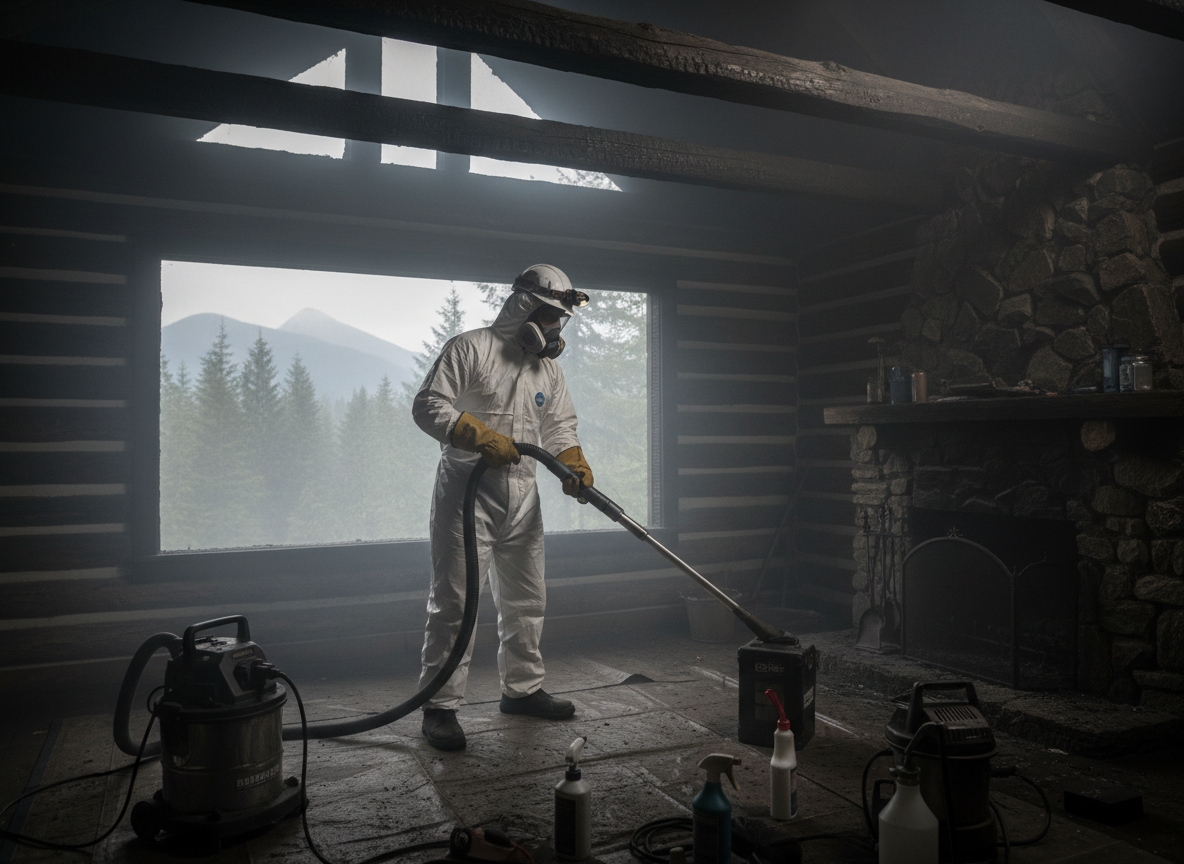
Smoke remediation in Twin Peaks demands attention to the area's older mountain homes, many built with porous wood, plaster, and insulation that trap soot particles deep in cavities. Warm summers accelerate odor re-release while cold snowy winters slow evaporation, leaving residues that standard cleaning misses. Crews use HEPA air scrubbers, thermal fogging, and hydroxyl generators to reach behind walls and in attics common to Crestline and Lake Arrowhead-style builds. Failure to address HVAC systems often causes recontamination once furnaces kick on during winter.
Porous materials like carpet padding, drywall, and unsealed cabinets in Twin Peaks homes require targeted removal rather than surface wiping, especially after fires where smoke travels through shared walls in clustered neighborhoods. Mountain terrain can delay equipment access during snow, extending exposure time and allowing acidic residues to etch surfaces. Technicians test pH levels on concrete slabs and wood framing before sealing to prevent corrosion that shows up months later. Proper documentation of affected zones protects homeowners when insurance adjusters review claims from San Bernardino County properties.
Edge cases include smoke migration into crawl spaces under elevated homes typical in Twin Peaks, where moisture from melting snow combines with soot to create mold risks. Standard ozone treatments can damage electronics and fabrics still common in local cabins, so alternative methods are preferred. Sealing protocols must account for expansion joints that shift with freeze-thaw cycles, ensuring barriers hold through seasonal temperature swings.
Technician insight
In Twin Peaks, the thing that catches most people out with smoke remediation is how quickly soot bonds to cold, damp wood during snowy winters. Homeowners often wipe visible surfaces and think the job is done, but residues stay trapped in the older plaster and batt insulation common here until the next freeze-thaw cycle releases the odor again.
Attic Smoke Residue After Nearby Fire
Smoke from a controlled burn drifted into a Twin Peaks home and settled in the attic insulation. We found acidic soot on rafters and HVAC ducts that standard cleaning would have missed. Negative air and targeted fogging cleared the residues without disturbing the existing snow load on the roof. The home passed clearance testing and avoided secondary odor issues once heating resumed.
How it works
- 1
Initial Assessment
Technicians inspect all affected rooms, HVAC, attics, and crawl spaces to map smoke migration patterns specific to Twin Peaks construction.
- 2
Containment Setup
Negative air machines and plastic barriers isolate zones to prevent cross-contamination during winter when homes are sealed tight.
- 3
Soot Removal
HEPA vacuuming, chemical sponges, and specialized cleaners address surfaces without spreading particles into insulation or wood framing.
- 4
Odor Neutralization
Thermal fogging and air scrubbers neutralize embedded odors in porous materials before final air quality verification.
- 5
Final Clearance
Independent testing confirms residue removal and safe re-entry, with detailed reports for San Bernardino County insurance files.
Pricing
Costs depend on square footage affected, depth of soot penetration into insulation and framing, and whether winter access delays extend the timeline.