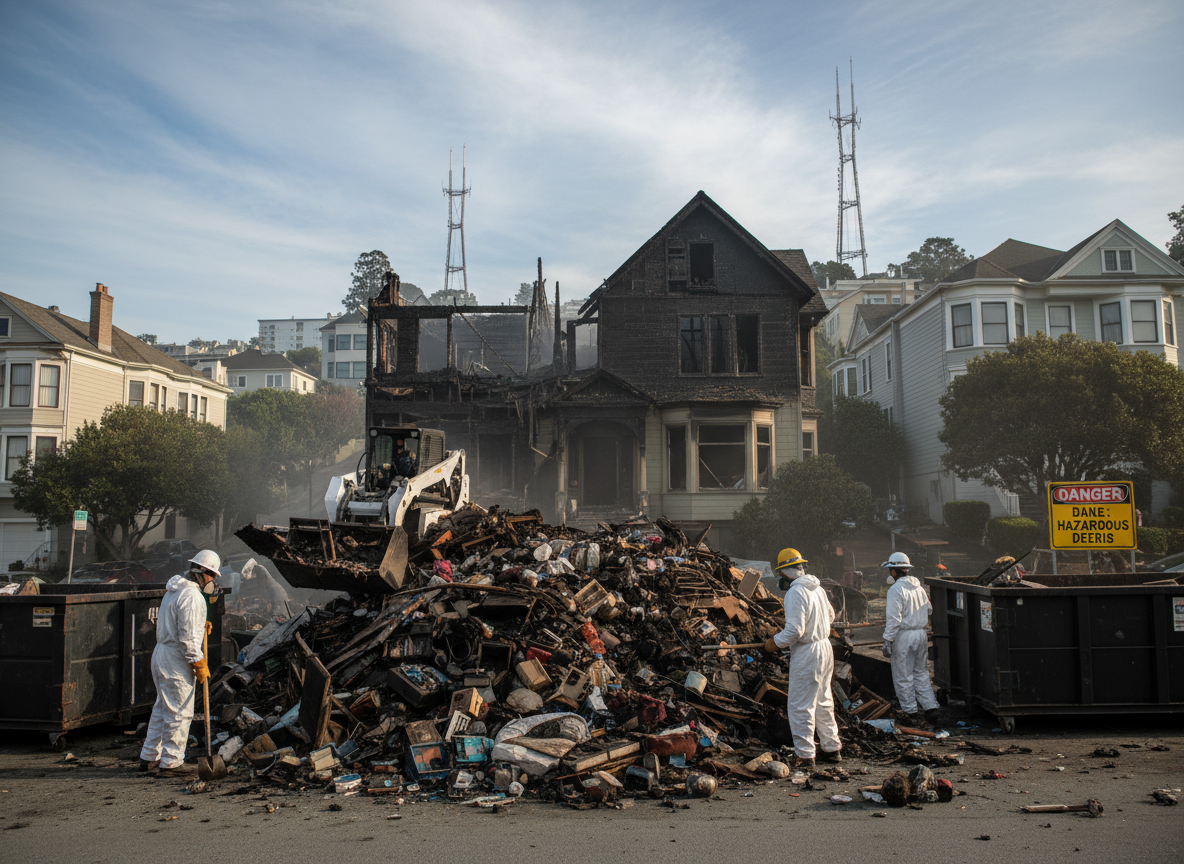
Hoarding situations after a fire in Twin Peaks create layered challenges because older mountain homes often contain decades of accumulated items that trap soot and smoke residue deep inside cabinets, attics, and crawl spaces. Cold snowy winters mean crews must protect remaining contents from moisture while removing charred materials before spring melt increases water intrusion risks. Wooden construction common in San Bernardino County cabins allows fire and smoke to travel through walls and floors in patterns not seen in newer builds, requiring systematic layer-by-layer inspection rather than surface cleaning alone.
Edge cases include properties near steep terrain where access for dumpsters is limited and ash can slide into drainage paths that feed into local watersheds around Lake Arrowhead. Crews must separate recyclable metals from porous materials that hold odors, then bag and remove everything without spreading particulates into unaffected rooms. Winter temperature swings cause condensation on cooled surfaces, so timing the final HEPA vacuuming after the structure dries prevents re-soiling that homeowners later notice on cold mornings.
Regulation notes for San Bernardino County include proper disposal of burned household chemicals and electronics that hoarders commonly store; these cannot be mixed with regular construction debris. Crews document each removal stage with photos because insurance adjusters often question volumes removed from hoarded spaces. Homeowners should expect multiple site visits because initial assessments miss items hidden behind furniture that only become visible once the first layer is cleared.
Technician insight
In Twin Peaks, the thing that catches most people out with hoarding cleanup after fire is how quickly snow melt turns hidden ash into muddy runoff that stains lower-level floors. Older cabins here often have uneven crawl spaces where belongings collect moisture from winter storms, so we have to stage extra drying time before final cleaning or the smell returns once temperatures drop again.
Crestline Road Cabin Post-Fire Hoard
A homeowner called after a kitchen fire spread soot through a two-story cabin packed with stored belongings. We found dense stacks in the basement that had absorbed smoke through unsealed floorboards. We removed items in sections, extracted residue, and cleared the space before winter storms arrived, allowing the owner to begin repairs without ongoing odor issues.
How it works
- 1
Initial Assessment
Walk through the property with the homeowner to identify hoarded zones, structural damage, and smoke migration paths typical in Twin Peaks homes.
- 2
Contents Removal
Bag and remove all damaged belongings layer by layer, separating hazardous items while protecting unaffected areas from cross-contamination.
- 3
Debris and Soot Extraction
Remove charred materials and perform HEPA vacuuming of remaining surfaces, accounting for cold-weather condensation that can re-embed particles.
- 4
Final Clearance
Conduct visual and odor inspection, then coordinate disposal compliant with county rules before any reconstruction begins.
Pricing
Pricing depends on volume of hoarded materials, extent of smoke penetration, and access constraints from terrain or weather; upfront quotes provided after on-site evaluation.