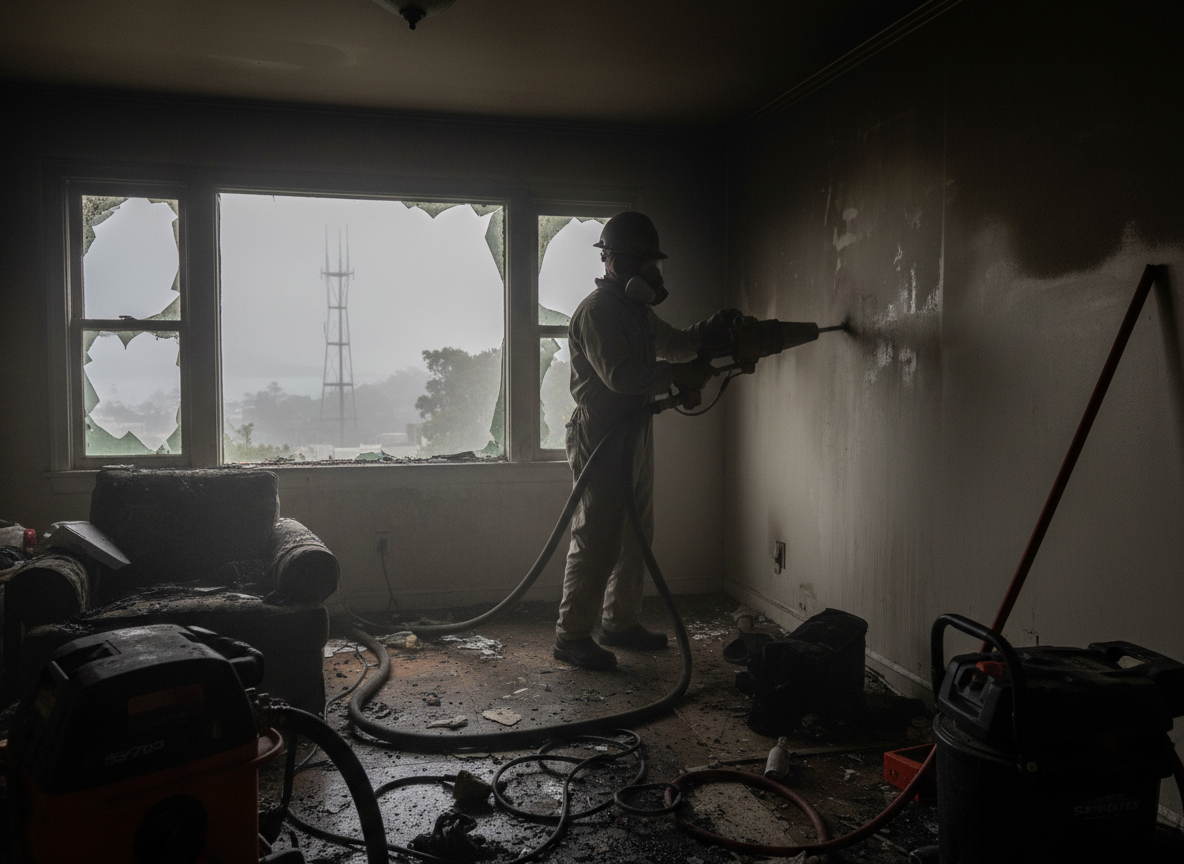
Twin Peaks sits in the San Bernardino Mountains where warm summers give way to cold snowy winters that drive freeze-thaw cycles. After a fire, melted snow from the roof or nearby slopes often enters charred walls and attics, then refreezes and widens cracks in older wood-frame homes common along CA-189 and the ridges above Lake Arrowhead. Restoration crews must first stabilize the structure against these repeated cycles before any cleaning begins, or hidden ice damage will reappear weeks later.
Smoke travels differently in mountain terrain. Inversion layers trap particulates in the valleys between Twin Peaks and Crestline, so soot settles deep into insulation and HVAC ducts even when the visible burn is limited to one room. Technicians remove and replace affected insulation rather than attempt surface cleaning because porous materials hold odors that return when winter heating starts. Electrical systems in homes built before modern codes also require tracing because knob-and-tube wiring can hide arc faults created during the fire.
Access is another local factor. Steep driveways and narrow roads common in the Twin Peaks area mean equipment must be staged at the address on CA-189 and carried in by hand or small carts, lengthening every phase of the job. Crews plan for weather windows because afternoon winds off the mountains can re-ignite hot spots or scatter ash into neighboring properties.
Final clearance testing follows California requirements for particulate levels before any reconstruction. Because Twin Peaks homes often sit on sloped lots, drainage around the foundation must be verified after debris removal so spring snowmelt does not undermine repaired footings.
Technician insight
In Twin Peaks the thing that catches most people out with fire damage restoration near me is how fast snowmelt from the first winter storm after the fire gets into the walls. Older homes along the ridge between Twin Peaks and Lake Arrowhead have steep rooflines that channel melt right into the same cavities the fire already opened, and once that water freezes it pushes framing apart before you even notice the smell returning.
Crestline Road Home After Lightning Strike
A lightning-caused fire damaged the attic of a 1970s home off Crestline Road. We found snowmelt had already entered the charred insulation and begun to refreeze in the wall cavities. We removed the wet materials, dried the framing over several days, then rebuilt the attic to current code before the next storm cycle.
How it works
- 1
Emergency Board-Up and Site Security
Secure the structure against weather and unauthorized entry using tarps and temporary barriers suited to mountain wind loads.
- 2
Assessment and Documentation
Inspect for hidden fire, smoke, and water intrusion paths created by snow melt in attics and wall cavities.
- 3
Contents Removal and Cleaning
Pack out salvageable items and treat surfaces with odor-neutralizing agents tested for cold-temperature performance.
- 4
Structural Drying and Monitoring
Apply targeted drying to prevent freeze damage while tracking moisture levels through winter temperature swings.
- 5
Reconstruction and Final Testing
Restore damaged sections to code and verify air quality before reoccupancy.
Pricing
Upfront quotes follow on-site inspection; final cost depends on square footage affected, depth of smoke penetration, and any freeze-related secondary damage.