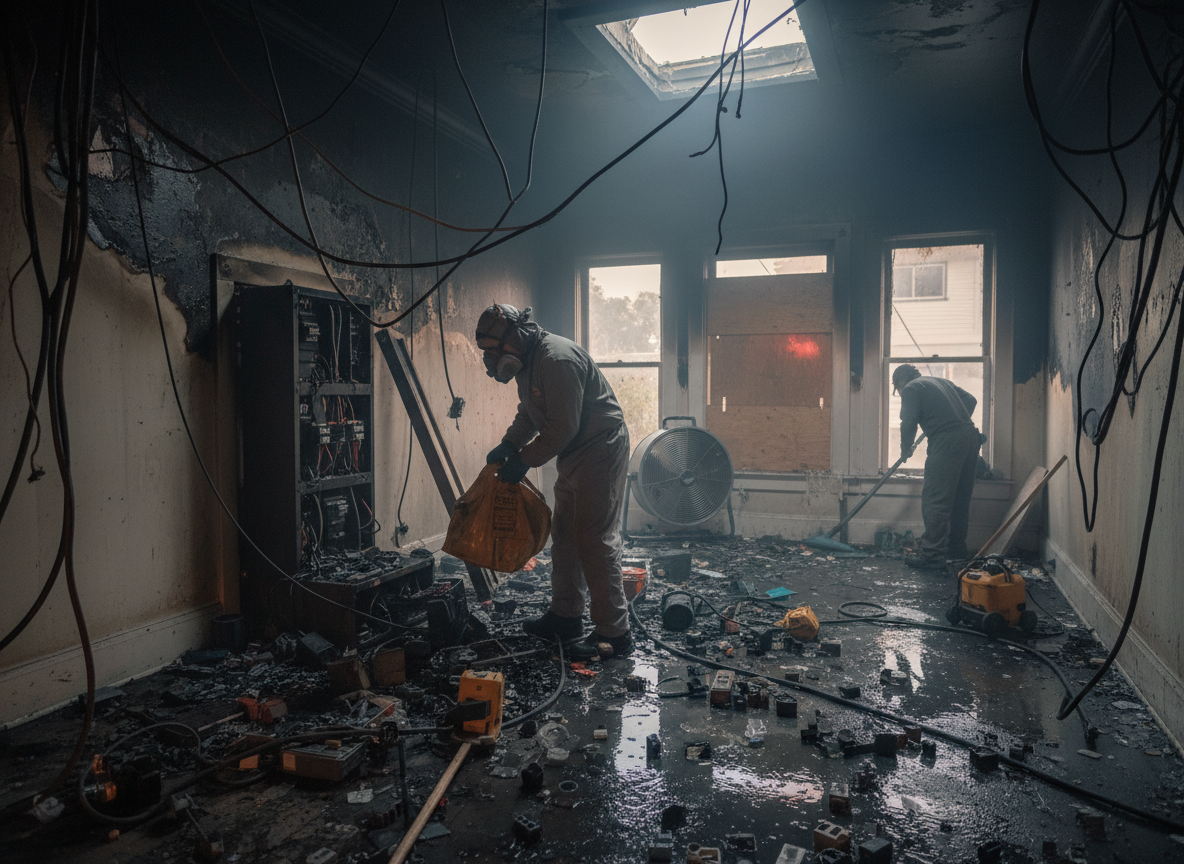
Electrical fires in Twin Peaks often start in older cabin wiring that has been stressed by decades of freeze-thaw cycles along CA-189 and the steep grades leading toward Crestline. Soot from these fires travels through knob-and-tube or early Romex runs and settles into wall cavities and attic insulation that is already packed with dust from the dry summer months. Crews must remove charred sections without disturbing load-bearing beams that support heavy winter snow loads, then seal remaining surfaces so residual acids do not corrode copper lines during the next cold snap.
After the initial power isolation, technicians test every outlet and junction box within the affected circuit because arcing can travel several feet along shared neutrals common in 1960s and 1970s builds near Lake Arrowhead. HEPA vacuums and specialized degreasers are used on textured wood ceilings that trap oily residue more than drywall, while negative air machines keep particles from migrating into unaffected bedrooms during the multi-day process. Homeowners are advised against running HVAC until ducts are inspected, as mountain winds can push soot back into living spaces once systems restart.
Final clearance includes moisture checks on subflooring because melted snow tracked in during winter response can combine with alkaline soot to create hidden corrosion under vinyl or carpet. All debris is hauled to approved San Bernardino County facilities rather than burned on site, which is prohibited in the Twin Peaks fire district. This sequence prevents callbacks when spring rains raise humidity and reactivate odors that homeowners thought had been eliminated.
Technician insight
In Twin Peaks, the thing that catches most people out with Electrical fire cleanup is how snow trapped in the eaves along CA-189 keeps soot damp for weeks, letting acids eat deeper into old aluminum wiring than the same fire would in drier Crestline homes.
Electrical Fire in Twin Peaks Cabin
An outlet short in a 1970s cabin near the highway junction sent soot through shared attic space. We found arcing had traveled along two additional circuits hidden behind insulation packed with decades of dust. After isolating power and removing affected sections, we cleaned and sealed cavities before winter snow arrived, restoring safe use without odor return during the first freeze.
How it works
- 1
Site Assessment and Power Isolation
Technicians arrive from the Twin Peaks location, verify circuit maps, and shut down power to prevent further arcing while documenting visible char patterns.
- 2
Soot Containment and Removal
Plastic barriers and negative air are set up; HEPA extraction begins on ceilings, walls, and cavities before any demolition to limit cross-contamination in tight mountain floor plans.
- 3
Wiring Inspection and Selective Demo
Exposed runs are tested for hidden arcing; damaged sections are removed while preserving structural members that carry snow loads.
- 4
Surface Cleaning and Odor Neutralization
Degreasers and sealants are applied, followed by air scrubbing to address residues that reactivate during cold, humid winter periods.
Pricing
Pricing varies with the extent of hidden wiring damage and the number of stories that must be accessed under winter conditions.