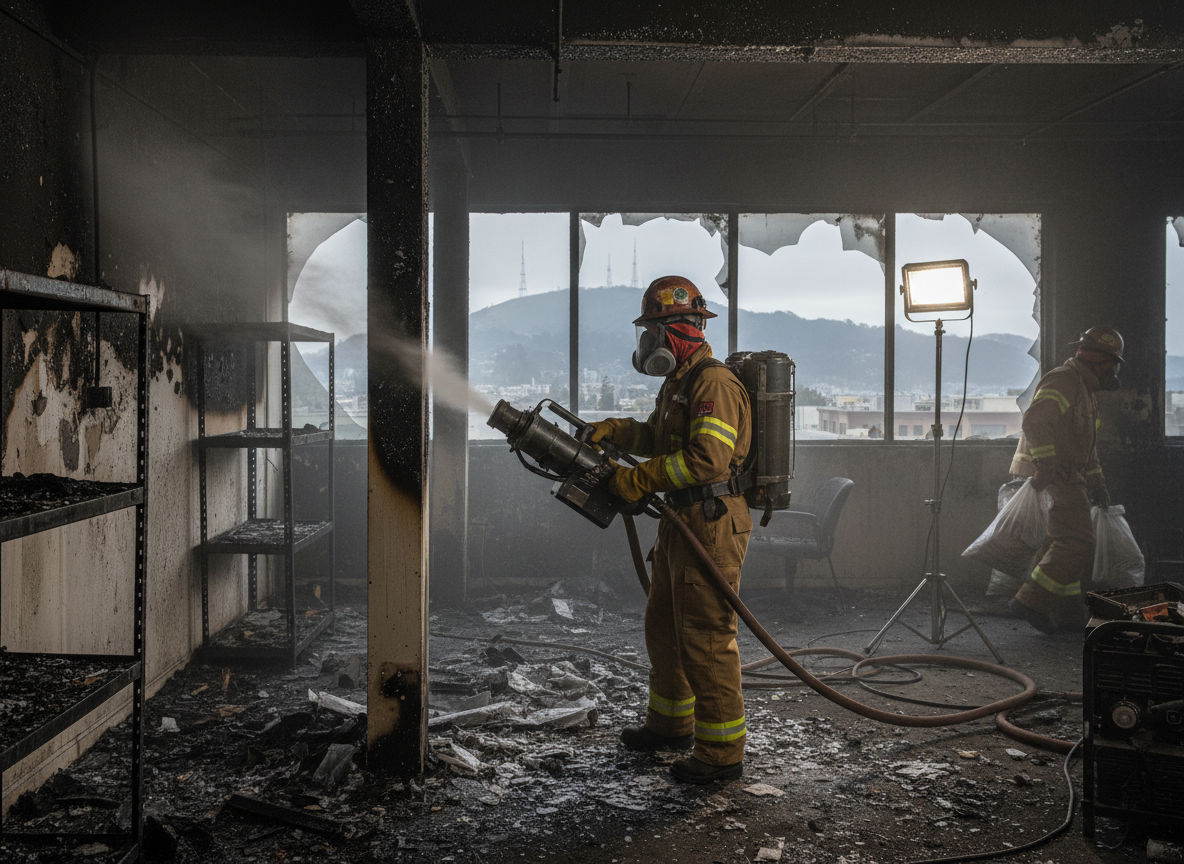
Twin Peaks commercial properties often sit in older wood-frame buildings on steep slopes where fire spreads quickly through attics and shared walls. Restoration starts with full structural assessment because charred beams hidden behind siding can fail under snow load once winter arrives. Crews must also account for how cold temperatures slow evaporation, leaving residual moisture that feeds mold in crawl spaces common under local shops and lodges.
Smoke penetrates HVAC systems and insulation in these mountain structures more readily than in valley buildings. Technicians remove and replace affected ductwork while testing for corrosive residues that attack metal fixtures and wiring. In San Bernardino County, permits require verification that restored electrical and plumbing meet current seismic and snow-load standards before any occupancy approval.
Edge cases arise when fire occurs near the end of fire season and snow begins early. Frozen water lines inside walls can burst days after the initial response, turning a contained loss into widespread damage. Teams stage temporary heat and dehumidification immediately to keep surfaces above freezing during the drying phase.
Cleanup also involves hauling debris down narrow CA-189 access roads, which limits equipment size and extends timelines compared with flatland jobs. Every step is documented for insurance adjusters who visit from the valley and need clear photos of terrain and weather impacts.
Technician insight
In Twin Peaks, the thing that catches most people out with Commercial fire restoration is how quickly snowmelt finds every seam we missed. Older commercial buildings along CA-189 often have hidden roof leaks that only show after we turn the heat on for drying; if we do not catch them the first week, the job doubles.
Crestline Road Lodge Kitchen Fire
A kitchen exhaust fire damaged the attic and HVAC of a small lodge near Lake Arrowhead. We found melted insulation dripping into guest rooms below and frozen condensate lines threatening to burst. We removed contaminated ductwork, installed temporary heat, and dried the structure before snow arrived. The lodge reopened before the holiday rush.
How it works
- 1
Emergency Board-Up and Site Security
Secure the structure against weather and trespass while documenting all visible damage for insurance.
- 2
Smoke and Soot Removal
Remove contaminated HVAC components, insulation, and porous materials that trap odors in commercial spaces.
- 3
Structural Drying and Stabilization
Apply heat and dehumidification to prevent freeze damage during Twin Peaks winters before repairs begin.
- 4
Rebuild and Code Compliance
Replace damaged framing, electrical, and finishes to meet San Bernardino County requirements for snow and seismic loads.
- 5
Final Clearance and Odor Verification
Test air quality and surfaces to confirm the building is safe for reopening.
Pricing
Pricing varies by building size, extent of hidden attic damage, and whether winter freeze protection is required.