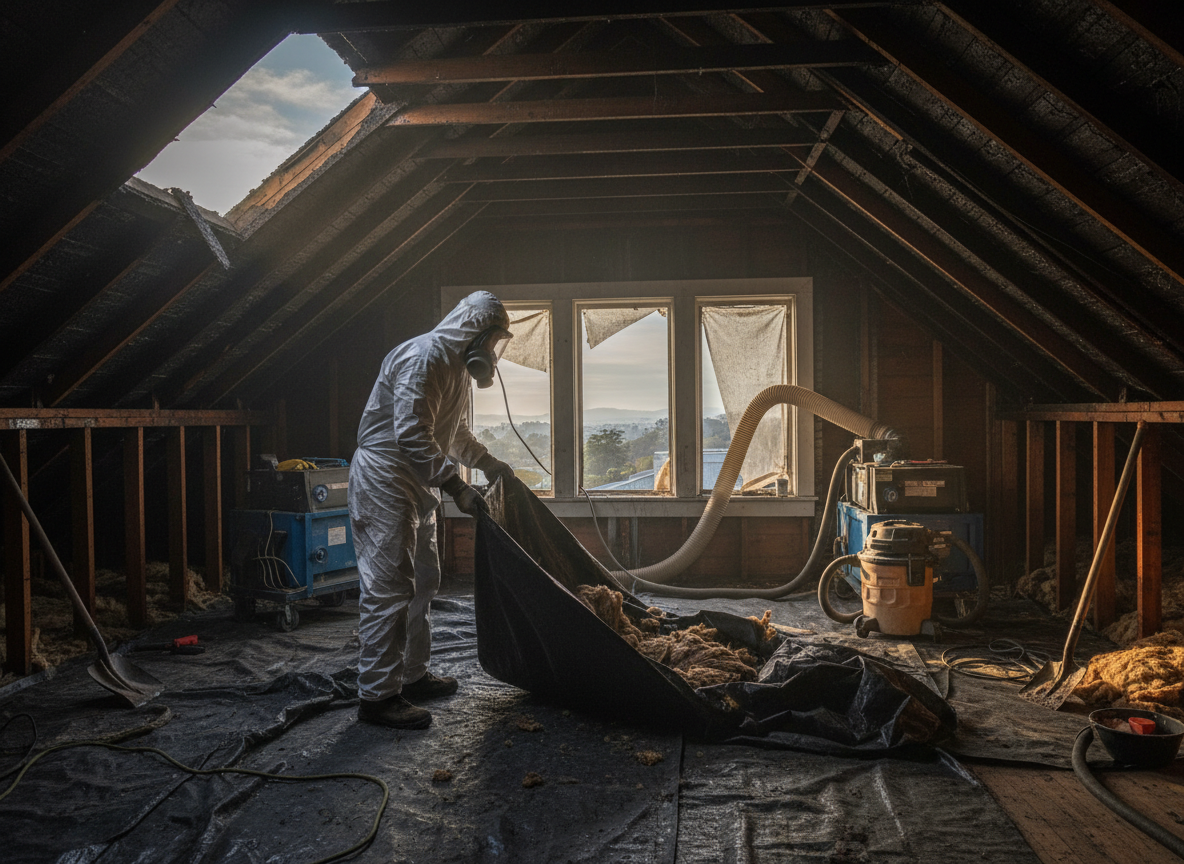
Twin Peaks attics in older mountain cabins often feature knob-and-tube wiring and cellulose insulation that ignite quickly and leave deep soot penetration into roof sheathing. Cold snowy winters create ice dams that trap moisture after suppression efforts, turning minor smoke events into widespread hidden decay along rafters. Crews must account for steep access roads in San Bernardino County terrain when staging equipment and removing charred materials without disturbing remaining snow load on the roof.
Fire in these attics frequently travels along shared walls in homes built close to Crestline ridges, requiring inspection of neighboring properties for ember migration through vents. Warm summer afternoons accelerate off-gassing of burned resins in pine framing, demanding negative air machines run longer than in valley locations. Replacement insulation must meet current R-value codes for the elevation while allowing for future snow weight without compressing the material.
Edge cases include rodent nests that have carried embers deeper into wall cavities and fiberglass batts melted onto electrical boxes. Restoration teams verify that all wiring upgrades comply with local permitting after the fire, especially in homes where prior owners added unpermitted dormers common around Lake Arrowhead.
Technician insight
In Twin Peaks, the thing that catches most people out with attic fire restoration is how heavy winter snow packs trap soot against the underside of the roof deck in pre-1970s cabins, letting it migrate into wall tops near Lake Arrowhead when the first thaw hits.
Electrical Fire in Twin Peaks Attic
A homeowner near CA-189 noticed odors after an electrical short. We found melted insulation and soot spread through rafters under snow-covered roofing. Damaged materials were removed, surfaces cleaned, and new insulation installed with proper ventilation. The attic was returned to safe use without further moisture issues from spring melt.
How it works
- 1
Initial Assessment
Technicians arrive 24/7, document fire origin in the attic, and test for hidden smoke in insulation and rafters while checking snow load impacts.
- 2
Containment and Removal
Negative pressure zones are set up, then damaged insulation, charred wood, and soot-covered materials are removed and disposed of following county guidelines.
- 3
Cleaning and Treatment
Specialized equipment cleans remaining surfaces and applies odor neutralizers suited to cold-weather trapped smoke in Twin Peaks attics.
- 4
Restoration and Verification
New fire-resistant insulation is installed, structural repairs completed, and final air quality checks confirm the space is safe before homeowner re-entry.
Pricing
Pricing varies with attic access difficulty, extent of insulation replacement, and winter weather delays common on Twin Peaks roads.