2026-10-16 ·
Clearing Flammable Brush Around Properties Near Twin Peaks Summit
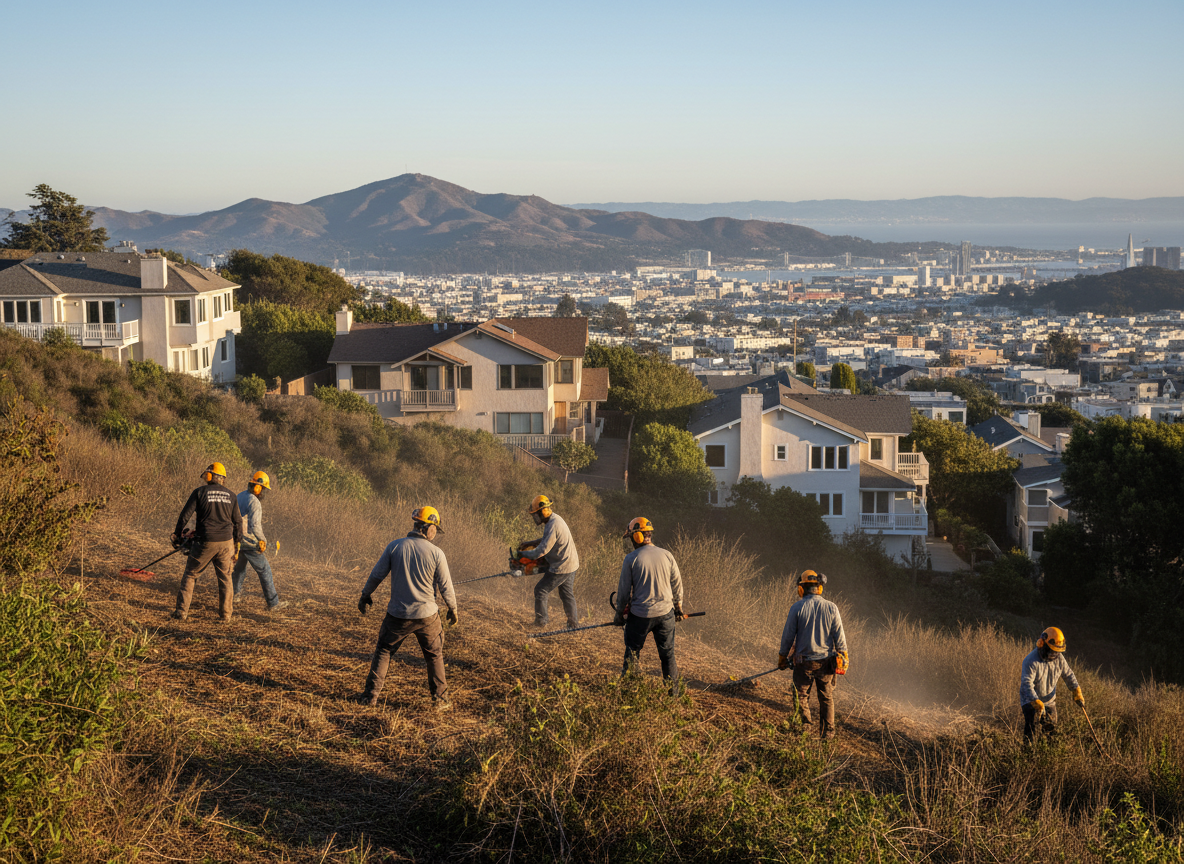
Clearing flammable brush within a 100-foot zone around Twin Peaks Summit properties cuts wildfire exposure by limiting fuel loads on the steep slopes common in San Bernardino County. This distance accounts for the way wind carries embers across the ridges between Twin Peaks and nearby Lake Arrowhead. Homeowners start by identifying manzanita, chamise, and dead oak that thrive in the warm summers and then remove them before the first snows arrive.
Understanding Fire Fuel Loads on Twin Peaks Hillsides
Twin Peaks sits at elevation in San Bernardino County where summers dry out vegetation quickly while winter snowpack leaves behind tangled deadwood. Properties built on the slopes near the summit often back up to national forest edges, so brush grows right up to foundations on many pre-1980 homes. The combination of steep grades and chaparral creates ladder fuels that let ground fires climb into tree canopies and threaten structures. Residents in surrounding Crestline and Lake Arrowhead report the same pattern after multi-year droughts. Removing continuous brush strips breaks that ladder effect and gives firefighters safer access routes during an incident. Local terrain also means crews must work with hand tools on slopes over 30 percent to avoid erosion that could worsen after heavy winter rains.
Step-by-Step Methods for Effective Brush Removal
Begin with a site walk to mark the 30-foot and 100-foot zones required by county guidelines for hillside lots. Cut low-growing brush first, then limb trees so lowest branches sit at least six feet above ground. Chip material on site when possible rather than hauling loads down CA-189, but keep chips at least 30 feet from any structure. On steeper sections near Twin Peaks Summit, use ropes and winches to pull cut brush uphill to a staging area instead of dragging it across slopes. Always check for protected species before cutting and stage work to finish before summer heat returns. These steps reduce the chance that a small ignition turns into a structure-threatening event.
Seasonal Timing That Matches Mountain Weather Patterns
Perform major clearing between late fall and early spring when snow keeps fire risk low and soil moisture reduces dust. Warm summer months make equipment use dangerous because sparks from chainsaws or mowers can ignite dry grass on Twin Peaks ridges. After winter storms, revisit sites to clear new growth that sprouted under the snow. Homeowners who time work this way avoid the peak fire season that typically runs from June through October in San Bernardino County. The same schedule aligns with permit windows for hillside properties, preventing delays when owners later need repairs.
Linking Brush Management to Post-Fire Recovery
Even well-maintained properties can suffer ember intrusion during a wind-driven event. After any fire, soot and ash removal becomes the next priority because residues settle into the same brush-cleared zones that once slowed the flames. Owners facing hillside repairs often consult Navigating City Permits For Fire Repairs On Twin Peaks Hillside Lots to understand slope stabilization rules that follow brush work. In older homes, Inspecting Older Wiring In Pre-1980 Twin Peaks Houses After A Small Fire pairs naturally with brush projects because both tasks address hidden ignition sources. Consistent brush management and prompt professional cleanup together lower the chance of repeat incidents on the same lot.