2026-10-16 ·
What Winter Rains Do To Fire-Damaged Roofs In Twin Peaks
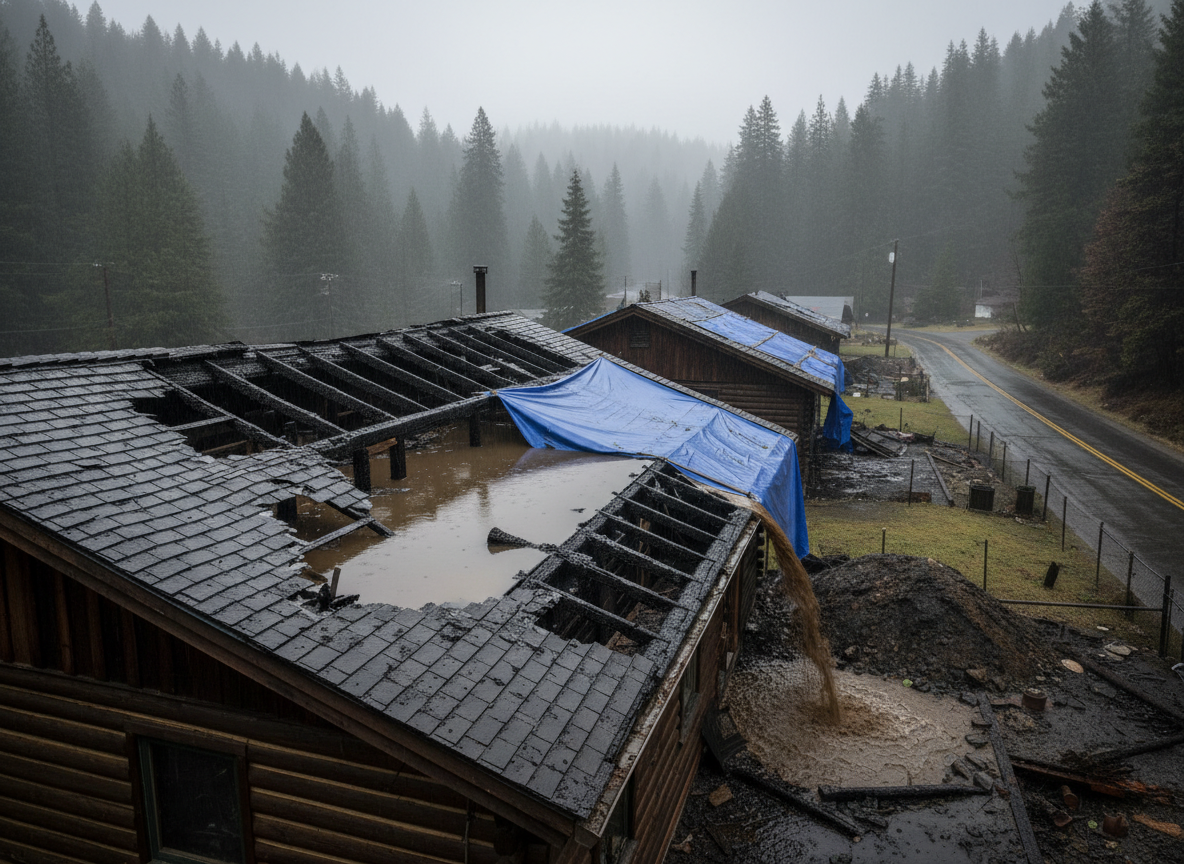
Winter rains in Twin Peaks can drive water through fire-damaged roofs and trigger secondary structural decay within 48 to 72 hours when temperatures hover near freezing at night.
How Twin Peaks Winter Rains Interact With Fire-Damaged Roofing
Twin Peaks sits at elevation in San Bernardino County where early winter storms often deliver steady rain before snow arrives. Fire-weakened shingles, underlayment, and decking lose their ability to shed water, allowing moisture to pool in valleys and around chimneys. Once temperatures drop overnight, trapped water expands and lifts remaining material, widening gaps. Homes built on the steep slopes near CA-189 experience faster runoff that funnels directly into these openings. Older stock common in the area, with 30- to 40-year-old composition roofs, shows accelerated deterioration because the original fasteners have already loosened from prior heat exposure.
Hidden Moisture Pathways in Local Housing Stock
Many Twin Peaks residences feature attic spaces that trap humid air after rain events. When a roof has already lost sections to fire, water migrates along rafters and soaks insulation, creating conditions for mold within a week. Cold snaps following rain freeze the moisture, cracking remaining sheathing. Properties near Lake Arrowhead and Crestline share similar exposure because the same mountain weather systems affect all three communities. Checking for soft spots from inside the attic after each storm reveals problems before ceilings stain. Documenting these locations with photos helps track progression between weather events.
Practical Next Steps After Rain Exposure
Homeowners should inspect accessible roof edges from the ground after every winter rain and note any new sagging or debris accumulation. When damage appears, contact a restoration team for a full assessment that includes moisture metering of decking and rafters. In hillside lots, San Bernardino County permit requirements often apply once structural elements are involved. Linking to detailed guidance on local rules prevents delays during repairs. For combined water and smoke issues, teams familiar with both fire-and-flood restoration protocols coordinate drying and odor control in one sequence. Regular monitoring through the season keeps small intrusions from becoming full roof replacements.
When Seasonal Patterns Demand Professional Evaluation
Twin Peaks receives its heaviest rain between November and March, with daytime highs often in the 40s followed by freezing nights. This cycle repeatedly stresses any roof already compromised by fire. If interior humidity rises above 60 percent after a storm or dark streaks appear on ceilings, the roof deck has likely taken on water. Addressing these signs before the first heavy snow prevents ice dams from forming over weakened areas. Properties in nearby Rimforest and Running Springs follow the same pattern, so owners in those communities watch the same indicators. Early involvement of a local crew limits the scope of work required once spring arrives.